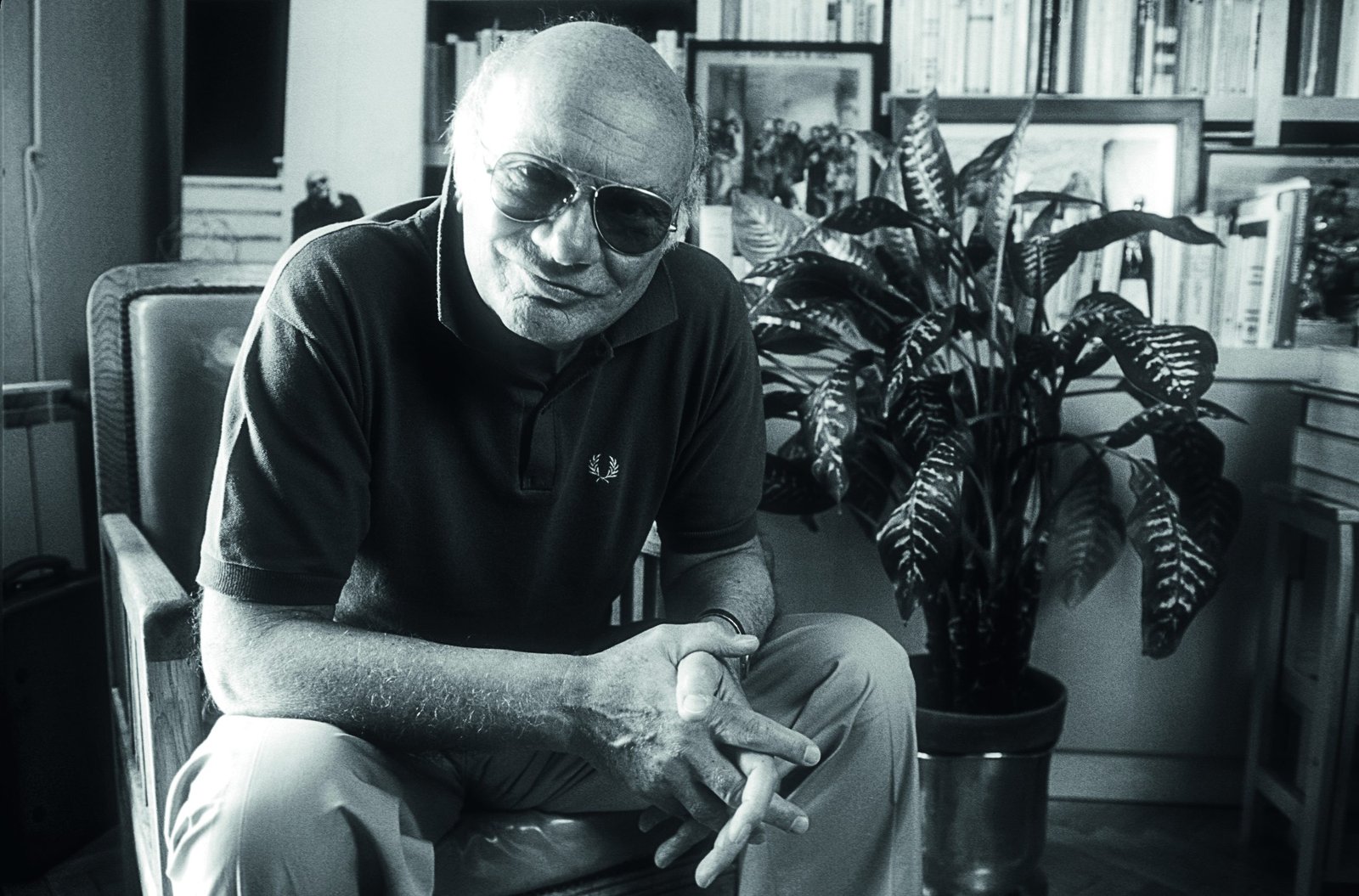
Francesco Rosi, a point of reference for internationally renowned filmmakers such as Martin Scorsese and Paolo Sorrentino, continues to have a fundamental impact on the Italian artistic panorama, remaining one of the most authoritative figures in world cinema.
“I was born on November 15, 1922, on a top floor full of light, where my mother's family lived, in the Montecalvario district, a few steps from the Teatro Nuovo.” This is how he remembers his birth in Naples, where as a boy he frequented Raffaele La Capria and then, during his university years, Giorgio Napolitano, Giuseppe Patroni Griffi, Antonio Ghirelli, Maurizio Barendson, a group of young people who would animate many sectors of our country's life, from politics to journalism, from cinema to theater.
His career began with the theater in 1947 when Ettore Giannini wanted him as an assistant for “Il voto” by Salvatore Di Giacomo, with actors such as Salvo Randone and Sarah Ferrati. In October he replaced his friend Achille Millo as an assistant, together with Franco Zeffirelli, for “La terra trema” that Luchino Visconti shot in Sicily. Thus began his adventure in the world of cinema, as he will call it in the autobiography written with Giuseppe Tornatore.
In the 1950s, Rosi collaborated with Luciano Emmer, Raffaello Matarazzo, Luigi Zampa and Michelangelo Antonioni, in a period that marked one of the highest moments of Italian film art. In 1958 he made his directorial debut with “La sfida”, a special jury prize at the Venice Film Festival, a hard film that tells the story of the transition of an Italy from peasant to industrial, marked by mafia power.
With “Le mani sulla città” (1963), Golden Lion at the Venice Film Festival, Rosi denounces the political and urban corruption of Naples. His films, from “Salvatore Giuliano” to “Tre fratelli” (Oscar nomination in 1982), up to “La tregua”, explore the human condition in the face of power.
His cinema is a rigorous lesson in method, characterized by a critical and profoundly human style, permeated by ethical tension. The critic Michel Ciment writes: “Rosi hunts for lies, he digs them out everywhere, he reveals the deceptive appearances of a world that acts in the shadows.”
One of his most significant films is “Il caso Mattei” (1972), in which he tackles the mystery of the death of Enrico Mattei, president of ENI. Rosi uses cinema as a powerful tool of investigation, immersing himself in the plots of power and corruption that marked the story.
Rosi rejects the label of “political cinema,” emphasizing that his films are artistic works that transcend time and space. His collaborators include screenwriters such as Tonino Guerra, Suso Cecchi d'Amico, Franco Solinas, and directors of photography such as Gianni Di Venanzo and Pasqualino De Santis. His works are enriched by the music of Gianni Ferrio, Piero Piccioni, Luis Enriquez Bacalov and Ennio Morricone, as well as by the performances of extraordinary actors such as Gian Maria Volonté, Philippe Noiret, John Turturro, Lea Massari, Irene Papas, Sophia Loren.
Francesco Rosi has always asked the spectator to be active, to reflect, to be indignant and to feel like a citizen. In 2003 he returned to the theater with “Napoli milionaria!” by Eduardo De Filippo, a great text that, together with “Uomini contro” and “La tregua”, highlights his determination against any form of war. His daughter Carolina writes: “La tregua is a warning: the unheard-of violence that erases human dignity is always lurking.”
In 2025, the tenth anniversary of his death will be remembered. Francesco Rosi passed away in his Roman home on January 10, 2015. In his diaries, published in 2022 for the centenary of his birth, he wrote: “A film sees, documents, denounces, imagines, tells. To do this, it thinks.”
TIMELESS MASTERPIECES OF PROTEST AND CIVIC ENGAGEMENT
Among his masterpieces, we find:
- Salvatore Giuliano (1962) – It tells the story of the Portella della Ginestra massacre on May 1, 1947, investigating the links between crime, politics, and justice.
- Hands on the City (1963) – A scathing analysis of political corruption in Naples through the story of a builder and city councilor.
- The Mattei Case (1972) – Investigates the mysterious death of Enrico Mattei, describing his attempt to challenge the oil multinationals.
- Excellent Corpses (1976) – Taken from “Il contesto” by Leonardo Sciascia, it is a reflection on political manipulation and the impunity of the powerful.
- Christ Stopped at Eboli (1979) – Based on the book by Carlo Levi, it tells the story of the anti-fascist author's exile in Lucania.
- Forget Palermo (1990) – It addresses the problem of drug trafficking and the legalization of drugs, continuing the discussion already begun in “Lucky Luciano”.
- The Truce (1997) – Based on the book by Primo Levi, it narrates the return home of the survivors of Auschwitz, describing a physical and moral odyssey in devastated Europe.
Francesco Rosi, intellectual, artist and filmmaker, continues to be an inspiration for those who see cinema as a tool for critical reflection. His ability to explore reality, his clear vision and his passion for justice are his most current legacy.