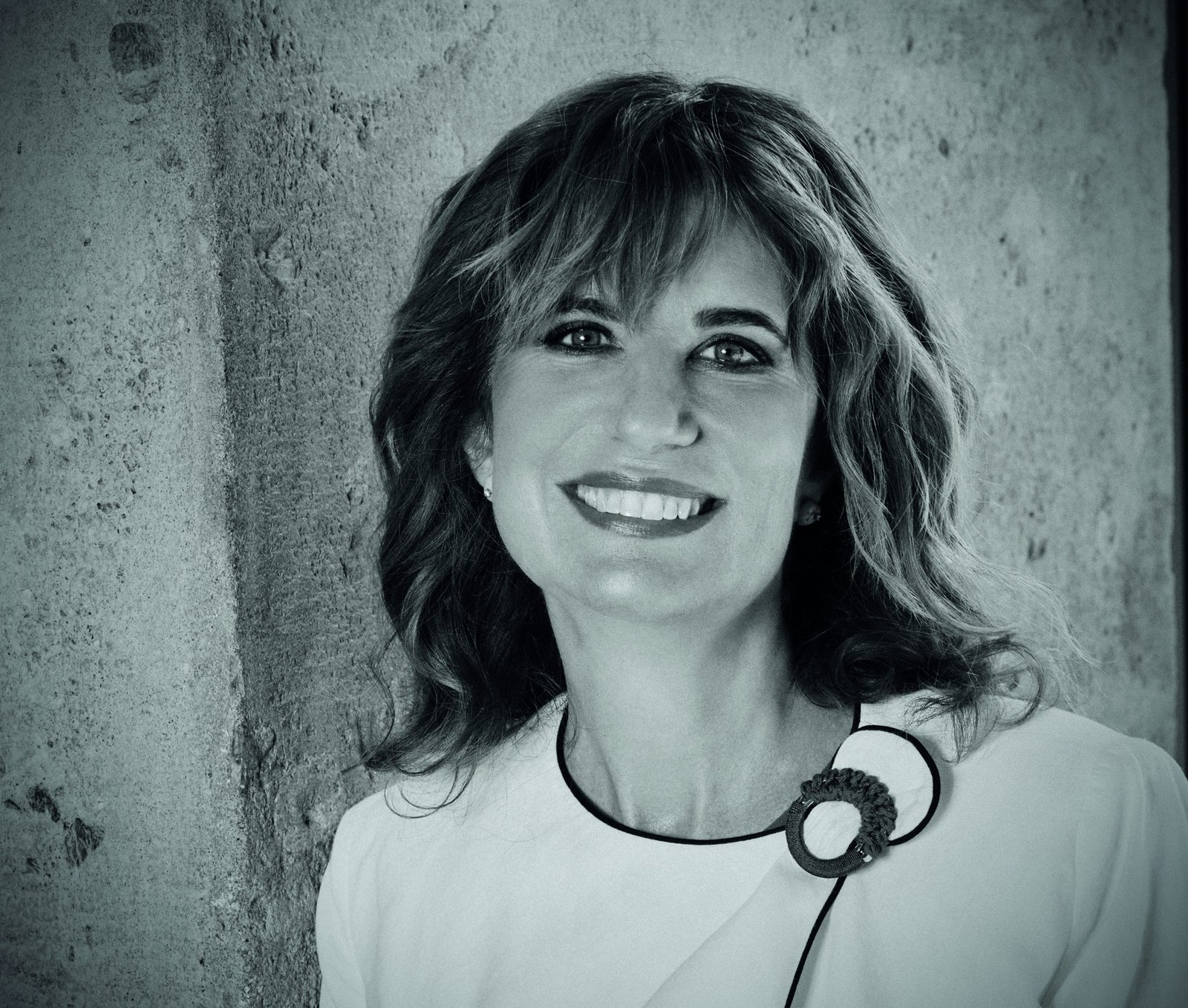
Maria Novella Viganò's debut novel has an important name, which means many things. It is entitled The superb and Solferino publishes it in the series Frescoes.

by Isabella Fava – Photo: Julian Hargreaves
The book tells the story of a family through three generations, from the end of the nineteenth century to today, of the knitwear factory that manages to grow. Of a large villa in the heart of Brianza that is a refuge and memory.
“It is a fictional story that however comes from an autobiographical memory,” explains the author. “My great-grandparents had created a knitwear factory from scratch and I wanted to tell their story in a fictional form, which I had heard my grandmother tell so many times. Above all, there was the desire to restore a bit of poetry and beauty to a narrative that had a whiff of regret.”
It is a saga that tells the story of a family but also of the history of Italy.
“I was fascinated by the idea of bringing the great events and great personalities of Italy into the world through the back door through the stories of ordinary people. And showing how these then influenced lives, changes, the economy”.
Lucia and Corrado, the founders, were exceptional people for that period.
“Lucia in particular is very modern. She takes care of the factory and the workers, she has innovative ideas and cares about the well-being of those who worked with her. For this reason she consults Anna Kuliscioff, one of the founders of the Italian Socialist Party. And then she chooses to send her young children to boarding school to make them independent and broaden their horizons”.
Why Anna Kuliscioff?
“It seemed right to introduce such an important character for women. The protagonist of the novel is inspired by my great-grandmother who was a militant socialist and, when she could, she financially supported some of Kuliscioff’s projects.”
There are the two wars with their difficulties. And many curiosities, such as the worker nuns who enter the story at a certain point.
“At the beginning of the 1900s they were employed in many companies in Italy. While I was doing research I spoke with some of them, now very elderly, who actually worked in the knitwear factory. They were part of a congregation, which still exists, founded in Botticino Sera by Don Tadini to protect the girls who left the village to go and work in the spinning mills. They are called workers because the idea was that the sweat of the brow brings you closer to Jesus”.
AND The Superb?
“It is the house that holds together all the generations. She herself is a character, in the end she transforms into a world.”
What did writing this book, diving into the complicated lives of Lucia and Corrado, Marco and Elena, Adele and Alvise, just to name a few, leave you with?
“The awareness that no matter what happens, there are always alternative routes.”