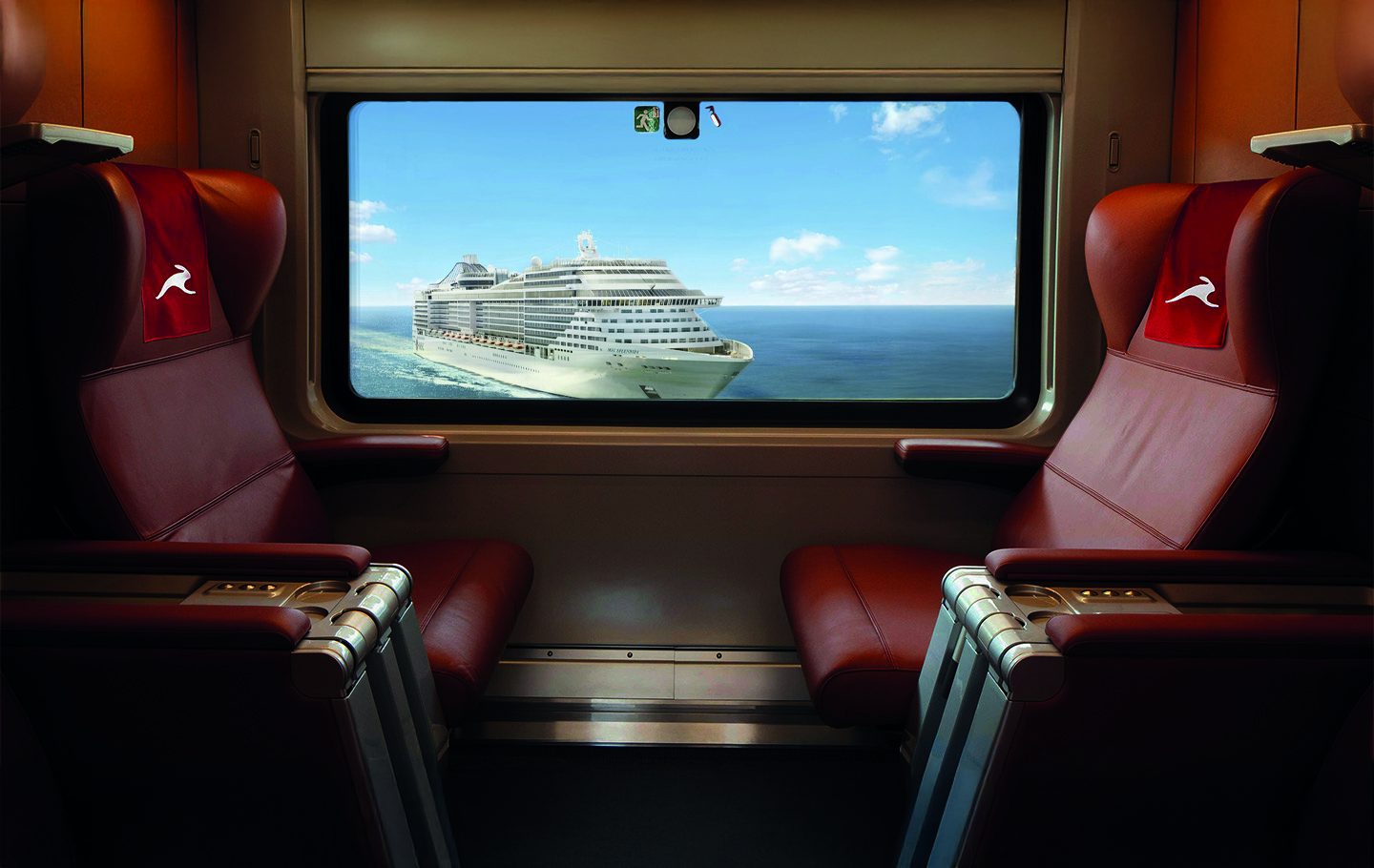
THANKS TO THE SYNERGY BETWEEN MSC CROCIERE, ITALO AND ITABUS, A NEW WAY OF TRAVELING IS BORN: A FLUID, SUSTAINABLE AND INTEGRATED EXPERIENCE THAT ENHANCES ITALY AND THE MEDITERRANEAN FROM THE FIRST KILOMETER.
There's something extraordinary about beginning a journey and already feeling part of the adventure. It's a modern dream that combines the poetry of movement with the pleasure of discovery: boarding a train, leaving the hustle and bustle of daily life behind, passing through art cities and coastal villages, watching Italy pass by the window, all the way to the sea. It's no longer just about reaching a port: the experience of the journey itself transforms into an exciting prelude to the cruise. A fluid, elegant, organic journey, where each step seamlessly connects to the next, like a single crescendoing melody.
It's the art of travel rediscovered: sustainable, comfortable, evocative, but above all, coordinated. The journey to the ports thus becomes an integral part of the adventure: an invitation to rediscover Italy through its landscapes, its train stations, its cities of art, and its coastal villages, before embarking on the allure of the Mediterranean.
Cruises are becoming increasingly accessible and sustainable thanks to an innovative integrated service combining train, bus, and ship, bringing cruise ships "closer to home" than ever before. This true revolution in tourist mobility is the result of the synergy between MSC Cruises and Italo—both part of the MSC Group—connecting major Italian cities to the embarkation ports of Civitavecchia, Naples, and Venice, offering a comfortable, seamless, and environmentally friendly journey. Those booking an MSC cruise departing from these ports can now choose a door-to-ship journey thanks to the train + bus connection by Italo and Itabus, which can be purchased with a single ticket. This virtuous intermodal model not only enhances the traveler's experience but also offers the opportunity to discover the cultural, historical, and scenic beauty of Italy and the Mediterranean basin along the way.
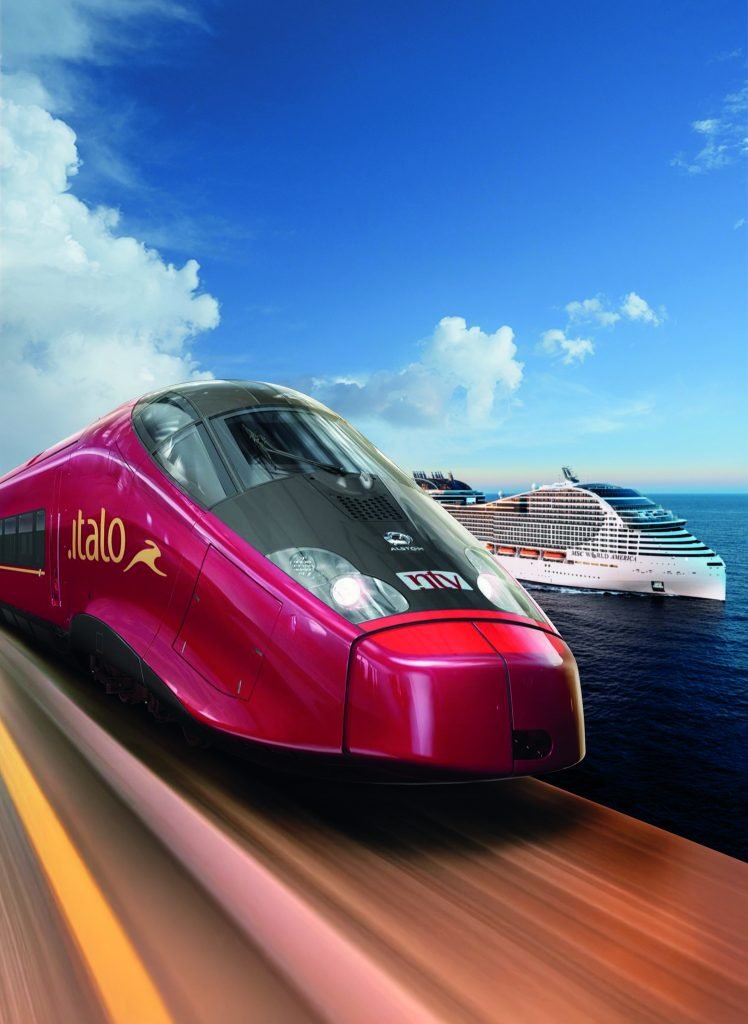
"We are proud that Italo's entry into the MSC Group has already yielded such a concrete and significant result," said Leonardo Massa, Vice President Southern Europe at MSC Cruises. "A holiday begins the moment you leave home. This service allows you to experience it from the very first moment in comfort, with quality standards aligned with those we offer on board. This is just the first step in a broader project that aims to connect regions and people, enhancing Italy's heritage along the journey." This is a tangible example of how integrated mobility can also become a tool to promote more sustainable, experiential, and informed tourism. "Intermodality is the future," emphasized Gianbattista La Rocca, CEO of Italo and President of Itabus. "More and more travelers want a seamless, efficient, and green service. MSC's arrival as a shareholder has strengthened our mission: to build a seamless, sustainable network connected to the country's major tourist itineraries." The service offers five daily connections to Venice, four to Civitavecchia, and fifteen to Naples, coinciding with MSC cruise departures. Passengers can, for example, reach Venice Mestre with Italo, continue with Itabus to the cruise terminal, and begin a journey through the wonders of the Adriatic. In Rome, they disembark at Tiburtina station and continue to the port of Civitavecchia. In Naples, Itabus not only connects cruises but also serves the port for other destinations in the Gulf, strengthening the interconnectivity of the Campania region.
This is the first intermodal train/bus/ship network in Europe: a fundamental step toward a new, simpler, greener tourist mobility, capable of accompanying the traveler on a continuous experience that enhances the identity and richness of Italian and Mediterranean regions, making them protagonists even before boarding.