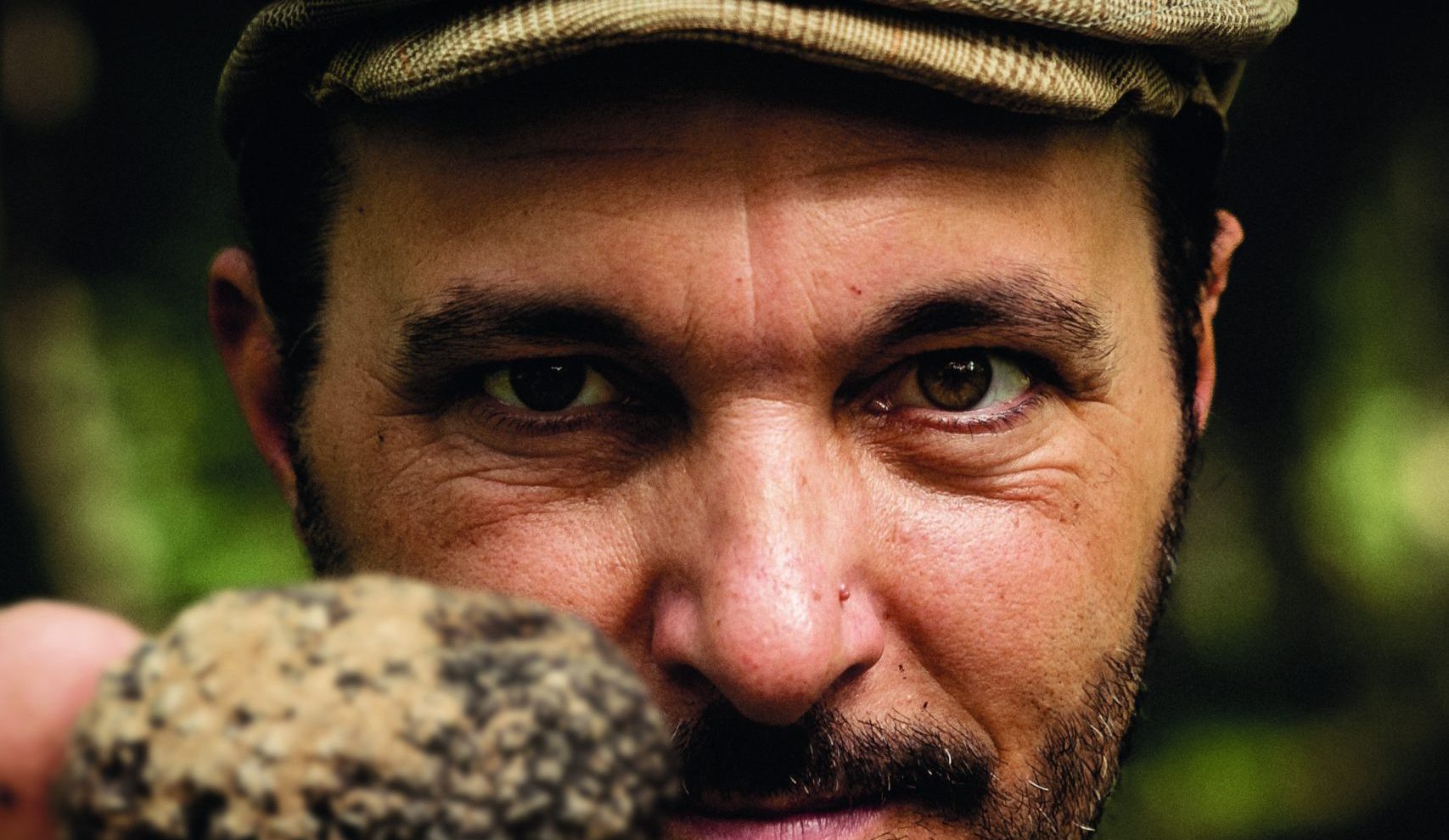
AN EXPERIENCE IN THE WOODS THAT ALLOWS YOU TO PARTICIPATE DIRECTLY IN TRUFFLE HUNTING, FOLLOWING ALL THE REAL PHASES OF THE SEARCH, FROM ENTERING THE LAND TO IDENTIFYING AND RECOVERING THE TRUFFLE, WITHIN AN AUTHENTIC WORK PROCESS AND THE SAME OPERATIONAL DYNAMICS THAT GOVERN DAILY HUNTING.

There are stories that arise not from an idea, but from habit. Not from a sudden intuition, but from a slow, almost imperceptible repetition, which over time transforms into something more complex. The story of Savini family It belongs to this category. It is not the result of an entrepreneurial decision, nor the outcome of a planned strategy. Rather, it is the natural consequence of a relationship built over time, through simple, reiterated gestures, seemingly marginal, yet capable, taken together, of defining a precise trajectory. In the beginning, truffles were not what they are now immediately recognized as one of the most refined elements of international cuisine. They lacked a defined position, were not surrounded by a constructed imagery, and there was no structured demand to support their value. Rather, they were something ambiguous, difficult to interpret, often perceived as foreign. A subterranean, irregular presence, emerging without any obvious logic and, precisely for this reason, struggling to find a place.
In those years, the relationship with truffles was mediated more by animal instinct than by human understanding. It was pigs, with their sense of smell, that identified them, brought them to light, establishing a primary connection with something that humans had not yet learned to understand. This seemingly insignificant fact is actually significant, because it speaks to a cultural distance that is difficult even to imagine today.

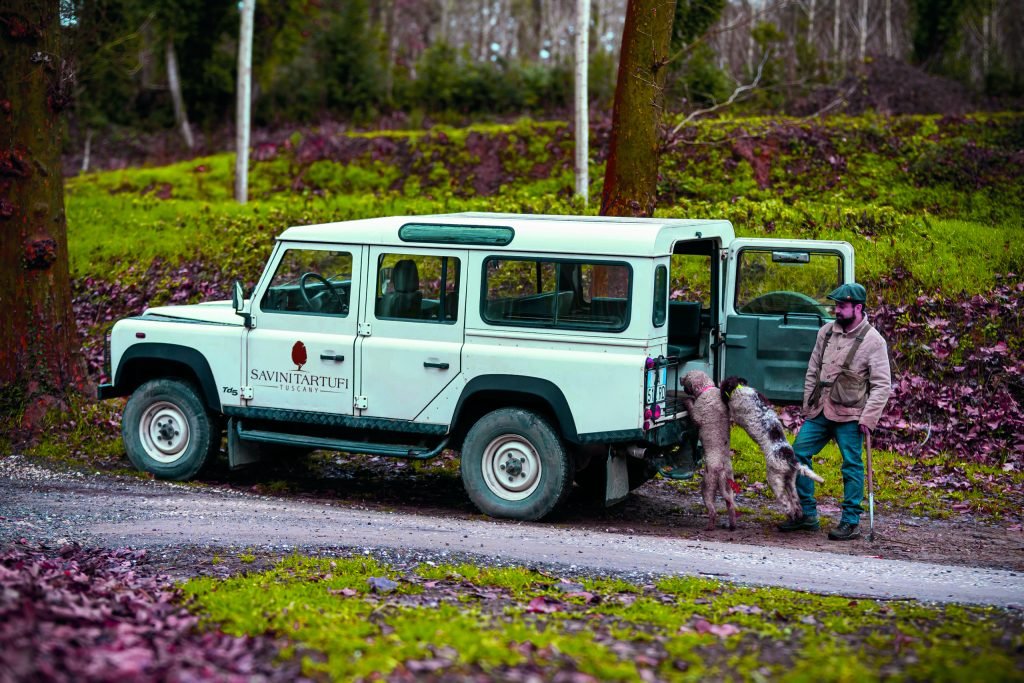
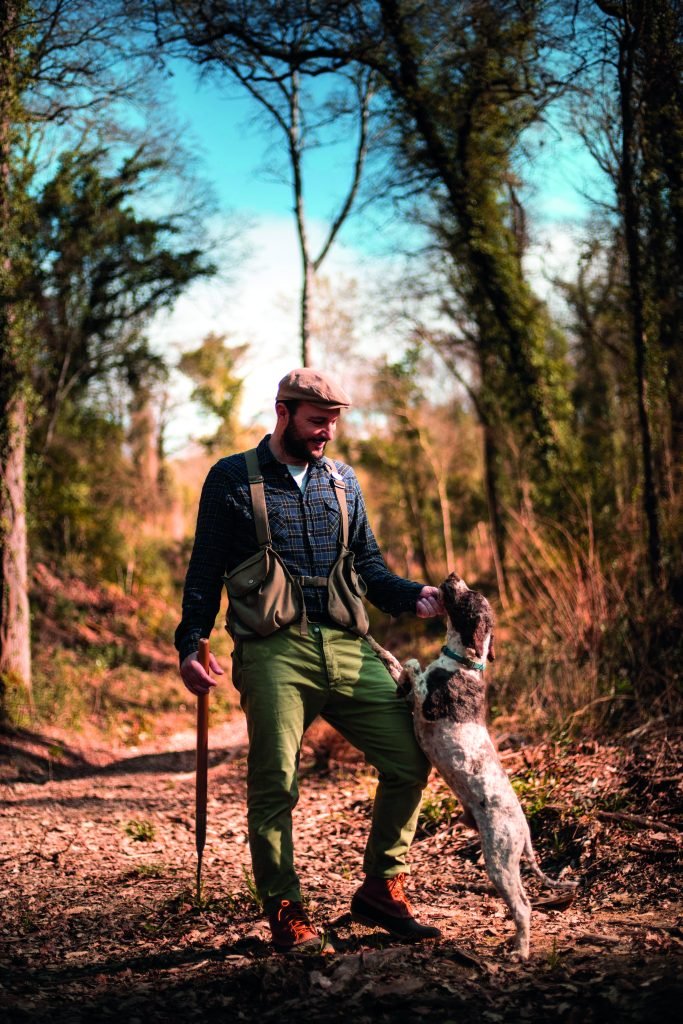
It is in this context that the Savini family fits in. Not with the aim of bridging that gap, but simply by living within it. The first encounter with truffles isn't charged with meaning, it has no precise function. It's an episode. But as often happens, it's precisely in the repetition of episodes that something more solid is built.
We return to the woods, we observe, we learn to recognize what previously went unnoticed. Without theory, without codified method. Only through direct experience, through continuous contact with an environment that is not easily interpreted. Truffles, in this sense, cannot be taught. We encounter them repeatedly, until they begin to become familiar. As one generation passes to the next, this knowledge is transferred without being formalized. It is not explained, it is not
It is organized into rules. It is transmitted through proximity, through sharing the same space, the same time. Walking together, observing together, repeating the same gestures until they become natural. It is a form of learning that defies simplification because it cannot be reduced to instructions. The territory, in this process, plays a central role. It is not a backdrop, but a complex structure that must be interpreted. The composition of the soil, the presence of certain plants, humidity, exposure: each element contributes to creating the conditions that make truffles possible. Nothing is isolated, nothing is random. Everything is part of a balance that cannot be forced.
Over time, as truffles gradually expanded, becoming an object of gastronomic interest and a symbol of a certain idea of excellence, the Savini family developed their business while maintaining this original connection. The company grew, structured itself, and opened up to the outside world, but never abandoned its starting point. This is a crucial aspect, because it defines the way everything else takes shape.
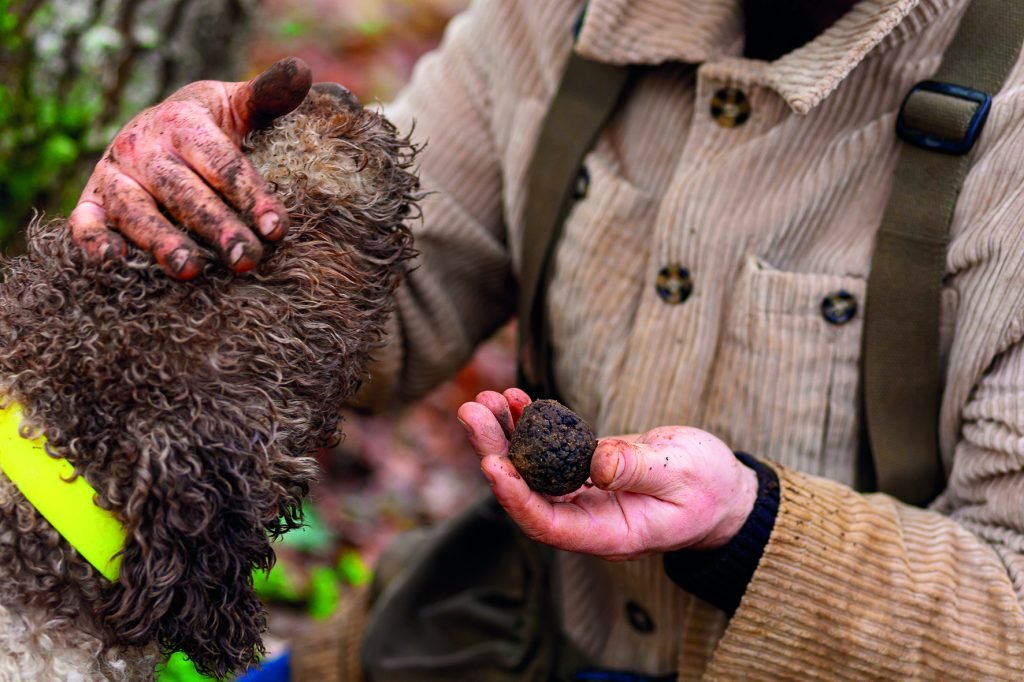
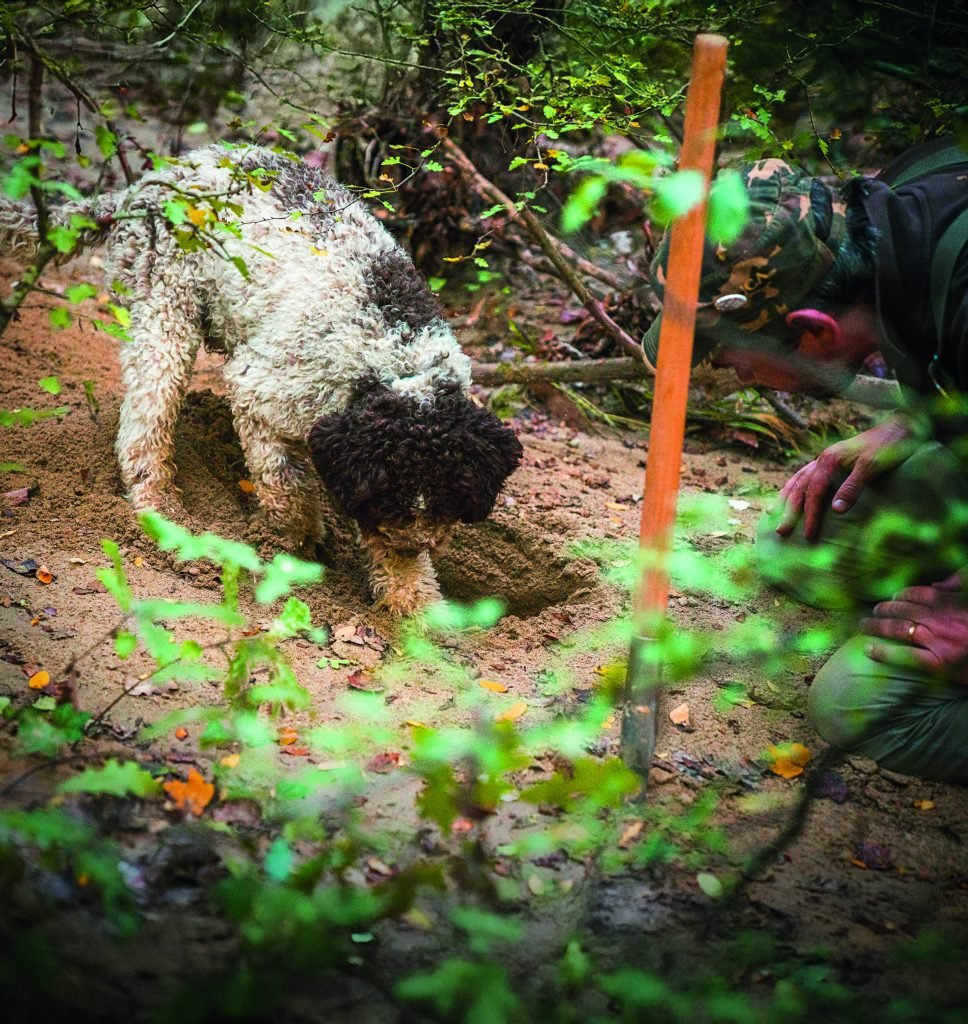
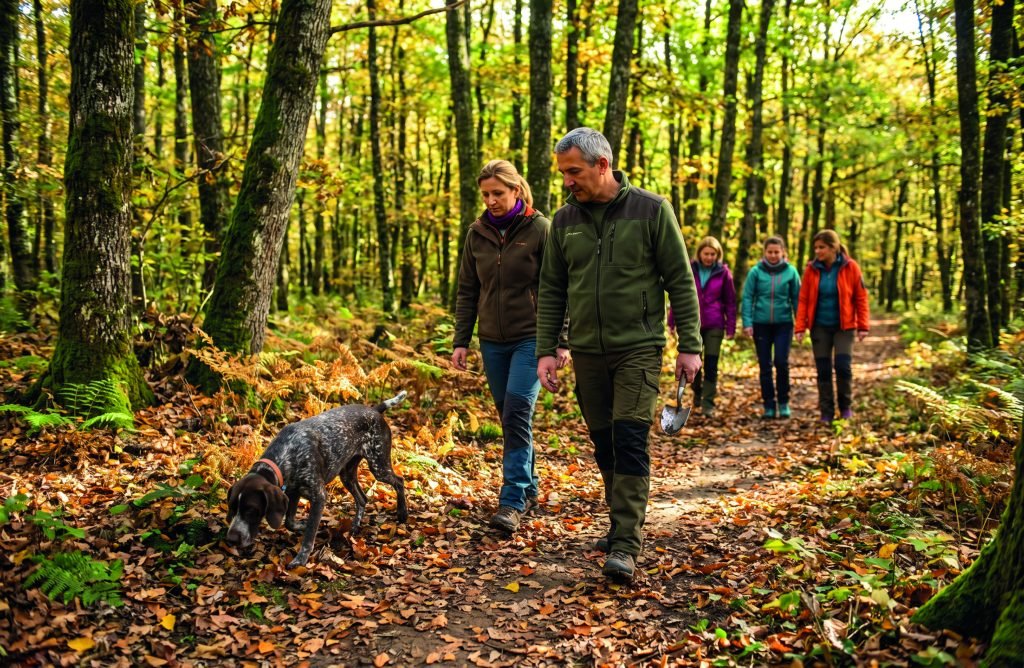
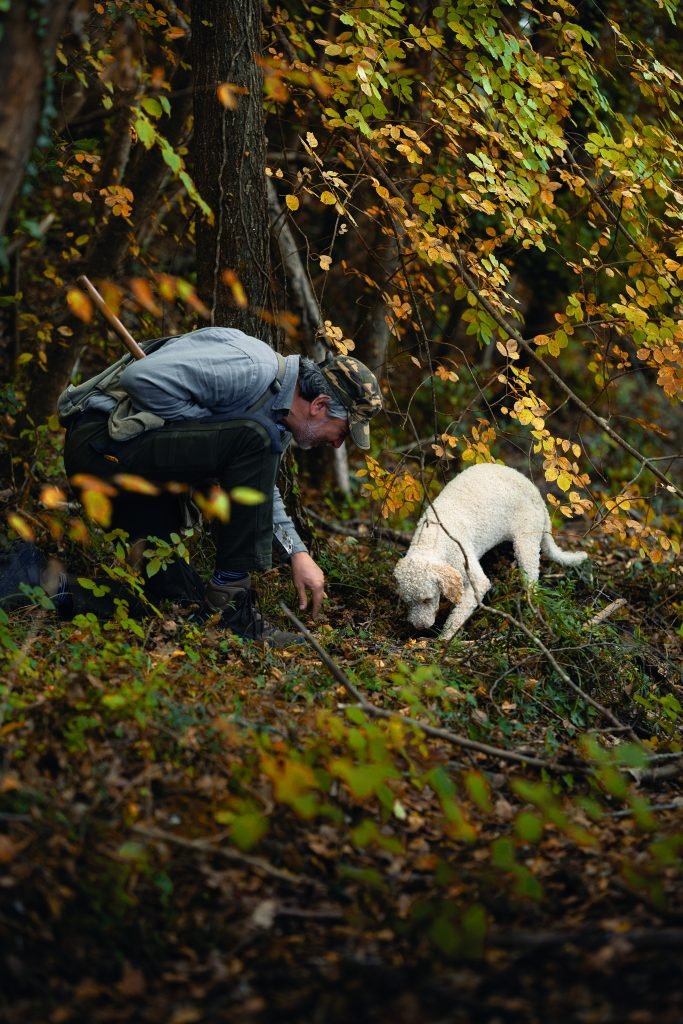
Truffle hunting, in fact, remains a substantially unchanged practice. It is neither mechanized nor simplified. There are no tools that can replace what happens in the forest. There is only a relationship between man, animal, and environment, based on a delicate, constantly negotiated balance.
And it is precisely within this continuity that what is today called Truffle Experience.
Reducing this expression to an organized activity would be misleading. It's not a product built for consumption, but rather a time-limited access to a real practice. What's shared isn't a representation, but a process that exists independently of the observer.
The transition into the woods marks a tangible change. Not just in space, but in perception. You gradually abandon your usual reference points, entering an environment that offers no immediate orientation, and you are forced to modify your way of moving.
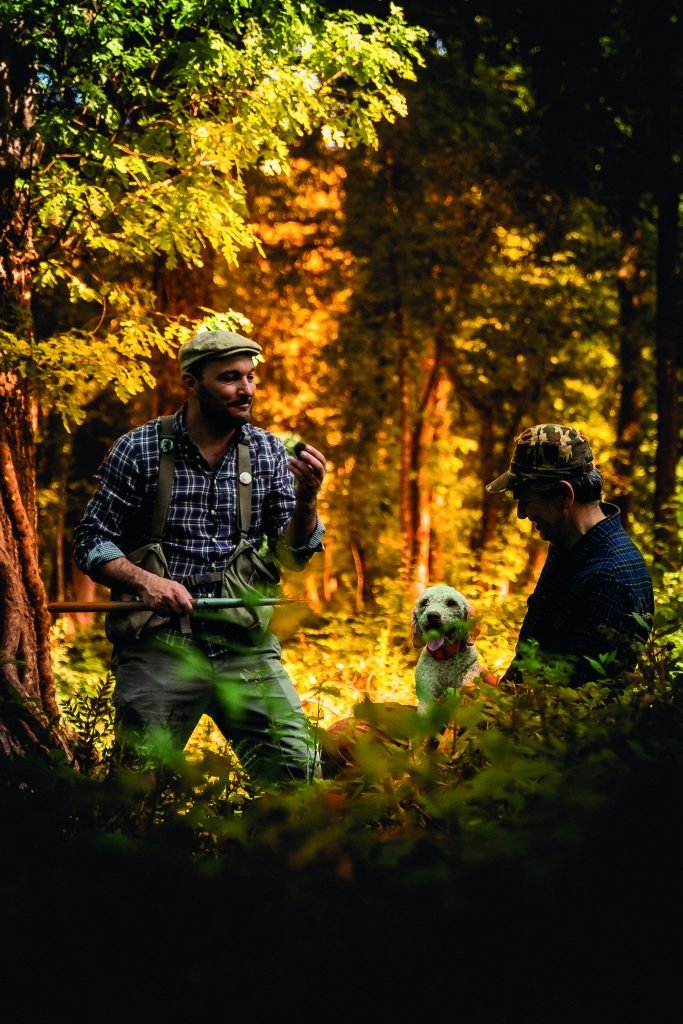
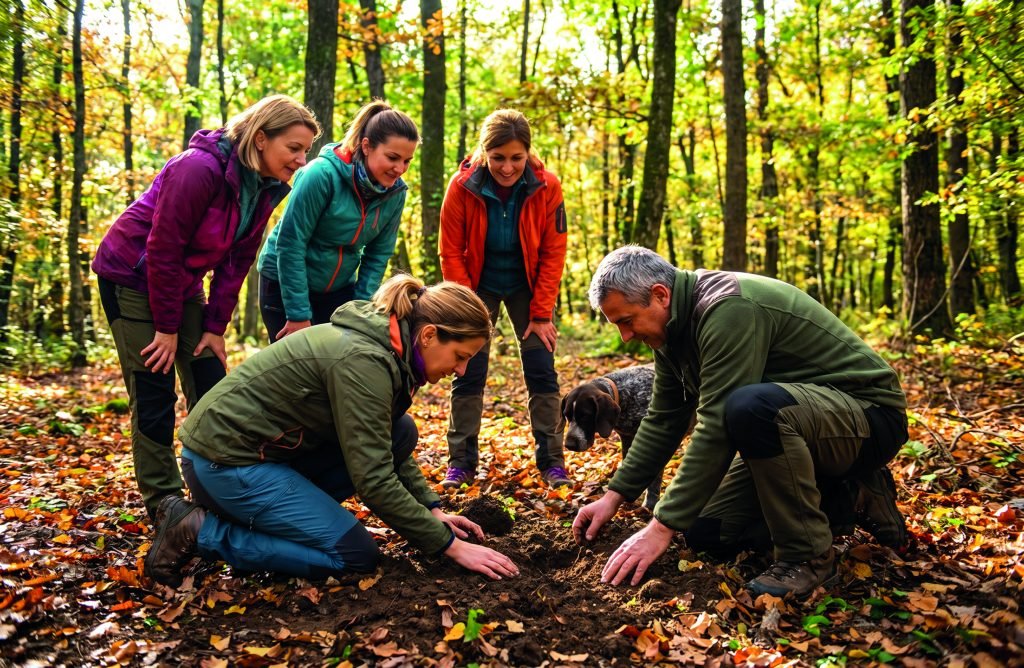
The pace slows. Attention shifts to details that would normally be ignored. The group moves without a rigid structure, adapting to the terrain, vegetation, and changing light. In this context, the dog plays a central role.
Not as a support system, but as a true interpreter of what is happening. It is the truffle hunter who reads the terrain, who identifies invisible signals, who determines the direction of the search. His behavior doesn't follow an immediately comprehensible logic, but it is extremely precise. He moves, stops, retraces his steps, insists. Every gesture is part of a process that defies superficial interpretation. The truffle hunter accompanies and interprets. He doesn't impose, he doesn't direct in an absolute sense. He observes, waits, and intervenes when necessary. The relationship between man and dog is continuous, based on minimal signals, on a balance built over time. The search proceeds without guarantees. This is a crucial point, because it eliminates any element of artifice. There is no guaranteed outcome, there is no planned sequence. There are moments of waiting, paths that lead nowhere, variations that continually alter the progress.
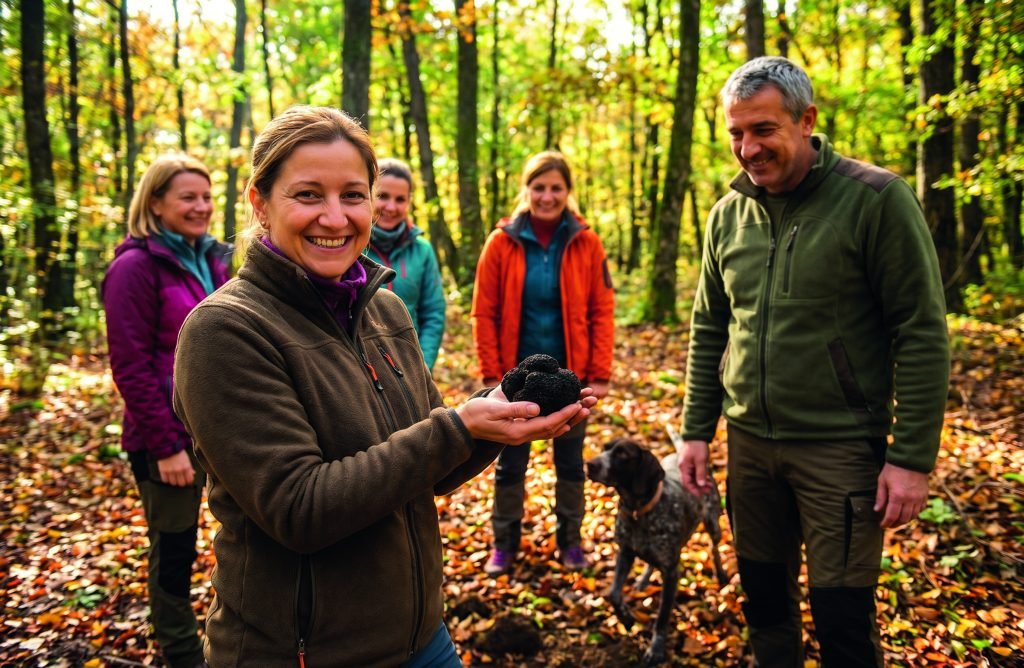
When the dog identifies a point of interest, everything changes subtly but clearly. Attention is focused, movements become more precise. The truffle hunter approaches, observes, waits a few more moments. Then he intervenes. The gesture is controlled, measured. The soil is carefully removed, avoiding disturbing the surrounding balance. It's not a matter of digging in the usual sense of the word, but of opening the space necessary to reveal what is hidden. When the truffle appears, there is no emphasis.
Not because it lacks importance, but because that moment is already contained in everything that preceded it. It's a natural consequence, not an isolated event. Afterward, we continue. We start walking again, maintaining the same pace, the same focus. The experience isn't built around rediscovery, but on the continuity of the process.
The return marks a transition, not a conclusion. The transition to the table occurs seamlessly, maintaining a coherence that begins with the land and ends with the plate. The truffle is not transformed into something else, but interpreted through a cuisine that focuses on the essential, avoiding any superfluous intervention.
What remains, in the end, is not just the memory of an activity, but the perception of having traversed a complex system, made up of interactions, different timescales, and unalterable balances. A system that continues to exist regardless of who observes it.
And for this very reason it maintains its value intact.